
Journals
-
Indonesian Climate Justice Review
Indonesian Climate Justice Review (e-ISSN: 3164-2284) is published by COLLEGIUM JUSTICIA INDONESIA, first published in 2024, and issued quarterly in January, April, July, and October in online format (electronic journal). It is a peer-reviewed, open-access academic journal dedicated to advancing interdisciplinary scholarship on climate justice, with a particular focus on Indonesia and the Global South. The journal provides an academic platform for scholars, researchers, legal practitioners, policymakers, and other stakeholders to examine the intersections of climate change, environmental law, human rights, indigenous peoples’ rights, socio-economic inequality, and sustainable development from a justice-oriented perspective.
The journal publishes original research articles, review articles, conceptual studies, policy analyses, case studies, and other scholarly works addressing climate governance, environmental policies, legal frameworks, climate adaptation and mitigation, environmental justice, indigenous and local community rights, sustainable development, and the protection of vulnerable and marginalized communities. The journal welcomes interdisciplinary contributions from environmental law, human rights, political ecology, development studies, climate science, international law, economics, sociology, indigenous studies, and related fields. Particular emphasis is placed on community engagement, participatory justice, equitable climate action, inclusive legal frameworks, community-based resilience, and evidence-based policy reform. The journal applies a double-anonymous peer-review process and an Open Access Policy, providing free and immediate access to all published articles. Copyright is retained by the authors, and all articles are published under the Creative Commons Attribution 4.0 International (CC BY 4.0) License.


-
Indonesian Court and Justice Review
Indonesian Court and Justice Review (e-ISSN: 3164-502X) is published by COLLEGIUM JUSTICIA INDONESIA, first published in 2024, and issued quarterly in February, May, August, and November in online format (electronic format). It is a peer-reviewed academic journal dedicated to advancing rigorous scholarship on courts, judicial institutions, justice systems, and legal practices in Indonesia and comparative jurisdictions. The journal provides an interdisciplinary academic platform for researchers, academics, legal practitioners, policymakers, and other scholars to critically examine the role of courts and judicial institutions in promoting the rule of law, human rights, democratic governance, judicial accountability, and access to justice. It welcomes doctrinal, normative, empirical, comparative, socio-legal, and interdisciplinary research addressing judicial decision-making, judicial independence and accountability, constitutional adjudication, court administration, legal pluralism, customary law, religious courts, judicial reform, and emerging challenges in the administration of justice.
The journal publishes Research Articles, Review Articles, Case and Judicial Decision Analyses, Legal and Judicial Commentaries, Book Reviews, Editorials, and Special Issue Articles. All research contributions undergo a rigorous double-anonymous peer-review process to ensure academic quality, originality, and integrity. The journal operates under a Gold Open Access Policy, providing free and immediate access to all published articles without subscription or access fees. Copyright is retained by the authors, and all articles are published under the Creative Commons Attribution 4.0 International (CC BY 4.0) License.



-
Indonesian Education Policy and Justice Review
Indonesian Education Policy and Justice Review (e-ISSN: 3164-5038) is published by COLLEGIUM JUSTICIA INDONESIA, first published in 2024, and issued quarterly in March, June, September, and December in online format (electronic journal). It is a peer-reviewed, open-access scholarly journal focusing on education, law, public policy, and justice in Indonesia and the Global South. The journal provides an academic platform for academics, researchers, practitioners, policymakers, and other stakeholders to disseminate research and scholarly perspectives on contemporary issues in education and its relationship with law, policy, governance, and social justice.
The journal publishes original research articles, review articles, conceptual studies, policy analyses, case studies, and other scholarly works within its scope. Areas of interest include education policy and governance, access and equity in education, the right to education, educational regulation, institutional accountability, social justice, equality, educational rights, and legal and institutional challenges in the education sector. The journal welcomes interdisciplinary contributions from law, education, public policy, political science, sociology, economics, and related fields. It aims to promote critical academic discussion and contribute to evidence-based education policies, legal reform, equitable access to education, good governance, and the protection of the right to education. The journal applies a double-anonymous peer-review process and an Open Access Policy, providing free and immediate access to all published articles. Copyright is retained by the authors, and all articles are published under the Creative Commons Attribution 4.0 International (CC BY 4.0) License.
-
Indonesian Minority Justice Review
Indonesian Minority Justice Review (e-ISSN: 3164-581X) is a peer-reviewed, open-access academic journal published by COLLEGIUM JUSTICIA INDONESIA in online format (electronic journal). First published in 2024, the journal is issued quarterly in January, April, July, and October. It provides an academic platform for scholars, researchers, legal practitioners, policymakers, and other stakeholders to disseminate research and scholarly perspectives on minority rights, legal recognition, equality, and social justice in Indonesia and other multicultural societies. The journal publishes original research articles, review articles, case studies, conceptual studies, policy analyses, and interdisciplinary scholarly works addressing legal and social issues affecting minority communities. Its scope includes minority rights, discrimination, equality before the law, freedom of religion and belief, ethnicity, gender equality and identity, disability rights, linguistic diversity, cultural rights, citizenship, and access to justice. It also welcomes studies on legal reform, public policy, governance, human rights, and institutional mechanisms for minority protection and social inclusion.
The journal encourages interdisciplinary contributions from law and related fields, including political science, sociology, anthropology, religious studies, and international human rights. It aims to promote rigorous academic discussion and practical recommendations that contribute to legal reform, equality, human rights protection, social justice, and inclusive governance. The journal applies a double-anonymous peer-review process and an Open Access Policy, providing free and immediate access to all published articles. Copyright is retained by the authors, and articles are published under the Creative Commons Attribution 4.0 International (CC BY 4.0) License.
-
Indonesian Economic Justice Review
Indonesian Economic Justice Review (e-ISSN: 3164-6875) is published by COLLEGIUM JUSTICIA INDONESIA, issued four times a year in February, May, August, and November, and was first published in 2024. It is a double anonymous peer-reviewed, open-access academic journal focusing on the relationship between law, economics, and justice in Indonesia and the broader Global South. The journal publishes scholarly works examining economic justice and the legal dimensions of taxation, labor, trade, land, investment, poverty alleviation, financial regulation, sustainable development, and inclusive economic growth.
The journal welcomes interdisciplinary research on legal norms, regulatory frameworks, economic institutions, and their impact on individuals and communities. The journal also encourages studies addressing inequality, human dignity, and the economic rights of vulnerable and marginalized groups. Contributions from law, economics, public policy, sociology, and related disciplines are welcomed. It publishes original research articles, review articles, case studies, policy analyses, and other scholarly works relevant to its scope. The journal applies an Open Access Policy, providing free and immediate access to all published articles without subscription or access fees. Copyright is retained by the authors, and articles are published under the Creative Commons Attribution 4.0 International (CC BY 4.0) license.
-
Indonesian Health Justice Review
Indonesian Health Justice Review (e-ISSN: 3164-6840) is published by COLLEGIUM JUSTICIA INDONESIA, issued four times a year in March, June, September, and December, and was first published in 2024. It is a double anonymous peer-reviewed, interdisciplinary academic journal focusing on the relationship between law, health policy, and social justice in Indonesia. The journal publishes scholarly works examining health law, healthcare regulation, public health policy, health equity, access to healthcare, the right to health, medical ethics, and human rights. It welcomes studies addressing health disparities and the legal and policy challenges affecting vulnerable and marginalized populations, including low-income communities, indigenous communities, persons with disabilities, women, and rural populations.
The journal encourages interdisciplinary research connecting health and law with public health, sociology, political science, economics, human rights, and related fields. It publishes original research articles, review articles, case studies, and other scholarly works relevant to its scope. The journal applies an Open Access Policy, providing free and immediate access to published articles. Copyright is retained by the authors, and articles are published under the Creative Commons Attribution 4.0 International (CC BY 4.0) license.
-
Indonesian Sports Justice Review
Indonesian Sports Justice Review (e-ISSN: 3164-6867) is published by COLLEGIUM JUSTICIA INDONESIA, issued four times a year in January, April, July, and October, and was first published in 2024. It is a double anonymous peer-reviewed academic journal focusing on the relationship between sports, law, and justice in Indonesia and related contexts. The journal publishes scholarly works examining legal frameworks, regulations, governance, integrity, fairness, equality, and social justice in the sports sector. It welcomes studies on athletes’ rights, access and participation, discrimination, sports governance, dispute resolution, ethical practices, sports organizations, and the legal and social dimensions of the sports industry.
The journal encourages interdisciplinary research connecting sports and law with human rights, social sciences, economics, public policy, and related fields. It publishes original research articles, review articles, case studies, and other scholarly works relevant to its scope. The journal applies an Open Access Policy, providing free and immediate access to published articles. Copyright is retained by the authors, and articles are published under the Creative Commons Attribution 4.0 International (CC BY 4.0) license.
-
Indonesian Theological Justice Review
Indonesian Theological Justice Review (e-ISSN: XXXX-XXX) is published by COLLEGIUM JUSTICIA INDONESIA, issued four times a year in February, May, August, and November, and was first published in 2024. It is a double anonymous peer-reviewed, interdisciplinary academic journal focusing on the relationship between theology, law, and social justice in Indonesia. The journal publishes scholarly works examining religious perspectives on justice, human rights, equality, peace, ethics, and human dignity within a pluralistic and multicultural society.
The journal welcomes studies on the relationship between religious teachings and legal systems, including Islamic law, Christian perspectives on law, secular law, constitutional principles, religious freedom, and governance. The journal also encourages interdisciplinary research connecting theology and religious studies with law, human rights, political science, sociology, philosophy, and related fields. It publishes original research articles, review articles, case studies, and other scholarly works relevant to its scope. The journal applies an Open Access Policy, providing free and immediate access to published articles. Copyright is retained by the authors, and articles are published under the Creative Commons Attribution 4.0 International (CC BY 4.0) license.
-
Indonesian Tourism Justice Review
Indonesian Tourism Justice Review (e-ISSN: 3164-5771) is published by COLLEGIUM JUSTICIA INDONESIA, first published in 2024 in online format (electronic journal), and issued quarterly in March, June, September, and December. It is a peer-reviewed, open-access academic journal dedicated to the study of tourism, law, and justice, with a particular focus on Indonesia and relevant regional issues. The journal provides an academic platform for scholars, researchers, legal practitioners, policymakers, tourism professionals, and other stakeholders to disseminate research and scholarly perspectives on the legal, social, economic, cultural, and environmental dimensions of tourism development.
The journal publishes original research articles, review articles, conceptual studies, policy analyses, case studies, and other scholarly works within its scope. Areas of interest include tourism regulation and governance, sustainable tourism, community and indigenous peoples’ rights, labor and employment rights, environmental protection, cultural heritage preservation, social justice and equity, tourism-related human rights, and local and regional economic development. The journal welcomes interdisciplinary contributions from law, tourism studies, social sciences, environmental studies, economics, cultural studies, and related disciplines. It aims to promote critical academic discussion and contribute to the development of tourism policies and legal frameworks that support sustainability, justice, human rights, community empowerment, cultural preservation, and inclusive economic development. The journal applies a double-anonymous peer-review process and an Open Access Policy, providing free and immediate access to all published articles. Copyright is retained by the authors, and all articles are published under the Creative Commons Attribution 4.0 International (CC BY 4.0) License.
-
Indonesian Art and Justice Review
Indonesian Art and Justice Review (e-ISSN: XXXX-XXXX) is published by COLLEGIUM JUSTICIA INDONESIA, issued four times a year in January, April, July, and October, and was first published in 2024. It is a double anonymous peer-reviewed academic journal focusing on the relationship between art, law, and social justice in Indonesia. The journal publishes scholarly works examining visual arts, performing arts, literature, digital media, artistic expression, freedom of expression, intellectual property, human rights, equality, and social justice. It also welcomes studies addressing the role of art in highlighting social inequality, discrimination, human rights violations, environmental issues, activism, cultural expression, and social transformation.
The journal encourages interdisciplinary research connecting art with law, philosophy, sociology, political science, cultural studies, and related fields. It publishes original research articles, review articles, case studies, and other scholarly works relevant to its scope. The journal applies an Open Access Policy, providing free and immediate access to published articles. Copyright is retained by the authors, and articles are published under the Creative Commons Attribution 4.0 International (CC BY 4.0) license.
-
Indonesian Tax Justice Review
Indonesian Tax Justice Review (e-ISSN: 3164-7553) is published by COLLEGIUM JUSTICIA INDONESIA, issued four times a year in February, May, August, and November, and was first published in 2024. It is a double anonymous peer-reviewed academic journal focusing on the relationship between tax law, public policy, and social justice in Indonesia. The journal publishes scholarly works examining taxation, tax policy, tax administration, taxpayer rights, tax fairness, transparency, accountability, public finance, and the role of taxation in reducing inequality and supporting social welfare. It also welcomes studies on tax avoidance and evasion, international tax justice, digital economy taxation, tax reform, and legal and policy developments in the taxation sector.
The journal encourages interdisciplinary research from law, economics, political science, public policy, and related fields. It publishes original research articles, review articles, case studies, policy analyses, and other scholarly works relevant to its scope. The journal applies an Open Access Policy, providing free and immediate access to published articles. Copyright is retained by the authors, and articles are published under the Creative Commons Attribution 4.0 International (CC BY 4.0) license.
-
Lentera Masyarakat Hukum
Lentera Masyarakat Hukum (e-ISSN: 3164-5542) is a peer-reviewed academic journal in the field of Law and Society and Socio-Legal Studies, focusing on the interaction between law, society, institutions, and social change. The journal covers scholarly studies on law in social contexts, legal culture, legal consciousness, access to justice, legal empowerment, social justice, vulnerable and marginalized communities, legal institutions and practices, legal pluralism, customary law, community justice, public policy, governance, and law reform. It welcomes empirical, socio-legal, doctrinal, theoretical, and interdisciplinary studies from law and related social sciences that examine the relationship between legal norms, institutions, social practices, and community experiences.
Lentera Masyarakat Hukum is published quarterly in January, April, July, and October and was first published in 2024. The journal is published in online electronic format (e-journal) by COLLEGIUM JUSTICIA INDONESIA. Each submitted manuscript is evaluated through a double-anonymous (double-blind) peer-review process, in which the identities of authors and reviewers are kept confidential to ensure an objective and rigorous scholarly evaluation.
-
Contemporary Issues on Indonesian Human Rights Law and Policy
Contemporary Issues on Indonesian Human Rights Law and Policy (e-ISSN: 3164-5585) is a peer-reviewed academic journal focusing on human rights law and policy in Indonesia, with relevance to Southeast Asian contexts. The journal examines the legal frameworks, policies, institutions, and mechanisms for the protection, promotion, and enforcement of human rights. Its scope covers human rights legislation and regulation, constitutional and international human rights law, human rights policy, state obligations, human rights institutions, accountability, access to justice, remedies, and legal reform.
The journal also addresses specific human rights issues, including civil and political rights, economic and social rights, equality and non-discrimination, freedom of religion and belief, indigenous peoples’ rights, gender equality, and environmental human rights, where these are examined through a legal or policy perspective. Published by COLLEGIUM JUSTICIA INDONESIA in online electronic format, the journal was first published in 2024 and is issued quarterly in January, April, July, and October. It applies a double-anonymous peer-review process and provides open access under the CC BY 4.0 License.
-
Palestine Issues on Indonesian Society
Palestine Issues on Indonesian Society (e-ISSN: 3164-4899) is an academic, peer-reviewed journal published by COLLEGIUM JUSTICIA INDONESIA in online format (electronic journal). First published in 2024, the journal is issued quarterly in February, May, August, and November. It provides an academic platform for scholars, researchers, legal practitioners, policymakers, and other stakeholders to examine issues concerning Palestine and their relevance to Indonesian society from legal, social, political, cultural, and humanitarian perspectives.
The journal publishes original research articles, review articles, conceptual studies, and other scholarly works within its scope. It welcomes interdisciplinary research addressing Indonesia’s legal and political positions on Palestinian rights, foreign relations, humanitarian assistance, international solidarity, public opinion, civil society, social movements, historical developments, and cultural expressions related to Palestine. The journal also encourages studies examining the influence of Palestinian issues on Indonesian law, politics, society, and culture. The journal applies a double-anonymous peer-review process and an Open Access Policy, providing free and immediate access to published articles. Copyright is retained by the authors, and all published works are licensed under the Creative Commons Attribution 4.0 International (CC BY 4.0) License.
-
Indonesian Anti Corruption Studies
Indonesian Anti Corruption Studies (e-ISSN: 3164-5836) is a peer-reviewed, open-access academic journal in the field of anti-corruption studies, published by COLLEGIUM JUSTICIA INDONESIA in online format (electronic journal). First published in 2024, the journal is issued quarterly in March, June, September, and December. The journal focuses specifically on corruption, anti-corruption, law enforcement, anti-corruption policy, and governance, particularly in relation to institutional integrity, transparency, accountability, and public trust. Its scope covers corruption prevention and detection, anti-corruption strategies and policies, corruption-related legal frameworks, law enforcement and judicial institutions, institutional reform, public sector integrity, good governance, transparency and accountability mechanisms, public financial management, civil society participation, and digital approaches to corruption prevention. The journal welcomes empirical, doctrinal, comparative, and interdisciplinary studies from law and related fields that contribute to understanding and addressing corruption. The journal applies a double-anonymous peer-review process and provides immediate open access to published articles under the CC BY 4.0 License, with copyright retained by the authors.
-
Indonesian Discourse on Communication, Democracy, and Political Movements
Indonesian Discourse on Communication, Democracy, and Political Movements (e-ISSN: 3164-6859) is published by COLLEGIUM JUSTICIA INDONESIA, issued four times a year in January, April, July, and October, and was first published in 2024. It is a double anonymous peer-reviewed academic journal focusing on the relationship between communication, democracy, and political movements in Indonesia. The journal publishes scholarly works examining political discourse, media and communication, democratic processes, civil society, political participation, social and digital media, political mobilization, and social and political movements. It also welcomes interdisciplinary studies addressing the intersection of communication with culture, religion, politics, and governance, including issues related to media freedom, government influence, and digital communication.
The journal encourages theoretical, empirical, and case-based studies that contribute to understanding the role of communication in shaping political discourse and democratic development. It publishes original research articles, review articles, and other scholarly works relevant to its scope. The journal applies an Open Access Policy, providing free and immediate access to published articles. Copyright is retained by the authors, and articles are published under the Creative Commons Attribution 4.0 International (CC BY 4.0) license.
-
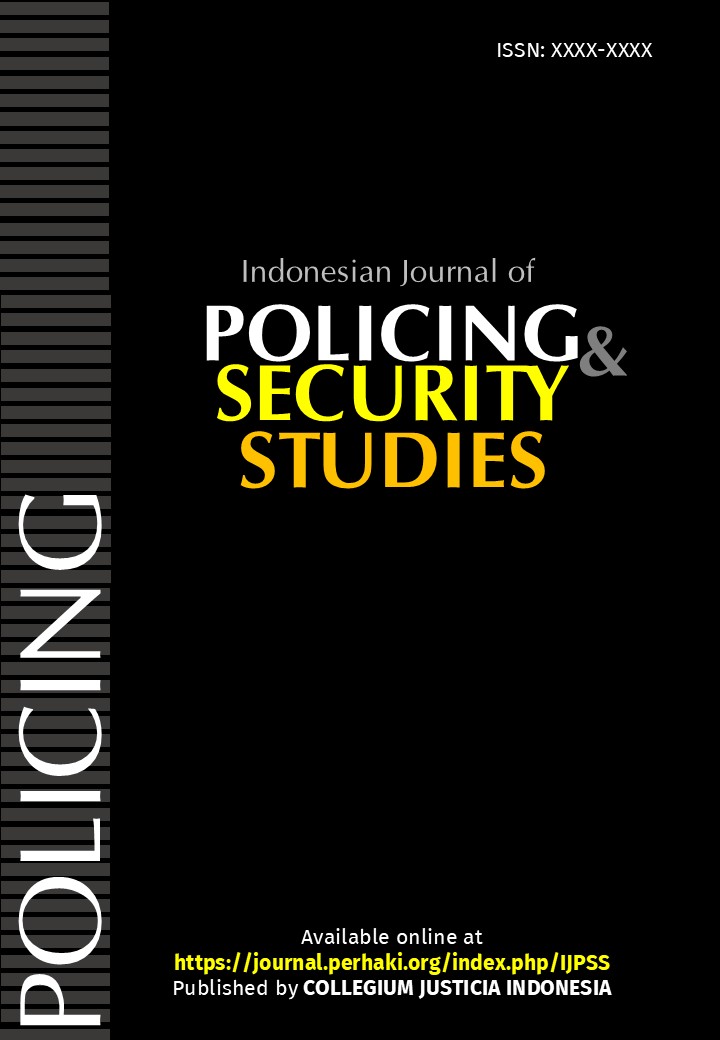
Indonesian Journal of Policing and Security Studies
Indonesian Journal of Policing and Security Studies (e-ISSN: 3164-7677) is published by COLLEGIUM JUSTICIA INDONESIA, issued four times a year in January, April, July, and October, and was first published in 2026. It is a double anonymous peer-reviewed academic journal focusing on policing, law enforcement, public security, and security studies in Indonesia. The journal publishes scholarly works examining policing practices, police governance, law enforcement, community policing, crime prevention, criminal investigation, police professionalism, accountability, public order, human rights, intelligence, cyber policing, and contemporary security challenges. It also welcomes interdisciplinary studies addressing the intersection of policing and security with law, politics, sociology, criminology, public administration, technology, and governance, including issues related to police reform, police–community relations, digital transformation, surveillance, transnational crime, and emerging security threats.
The journal encourages theoretical, empirical, comparative, and case-based studies that contribute to understanding the development of policing and security in Indonesia and its broader regional and international contexts. It particularly welcomes research that connects Indonesian experiences with wider debates in policing, criminal justice, and security studies. The journal publishes original research articles, review articles, and other scholarly works relevant to its scope. The journal applies an Open Access Policy, providing free and immediate access to published articles. Copyright is retained by the authors, and articles are published under the Creative Commons Attribution 4.0 International (CC BY 4.0) license.
-
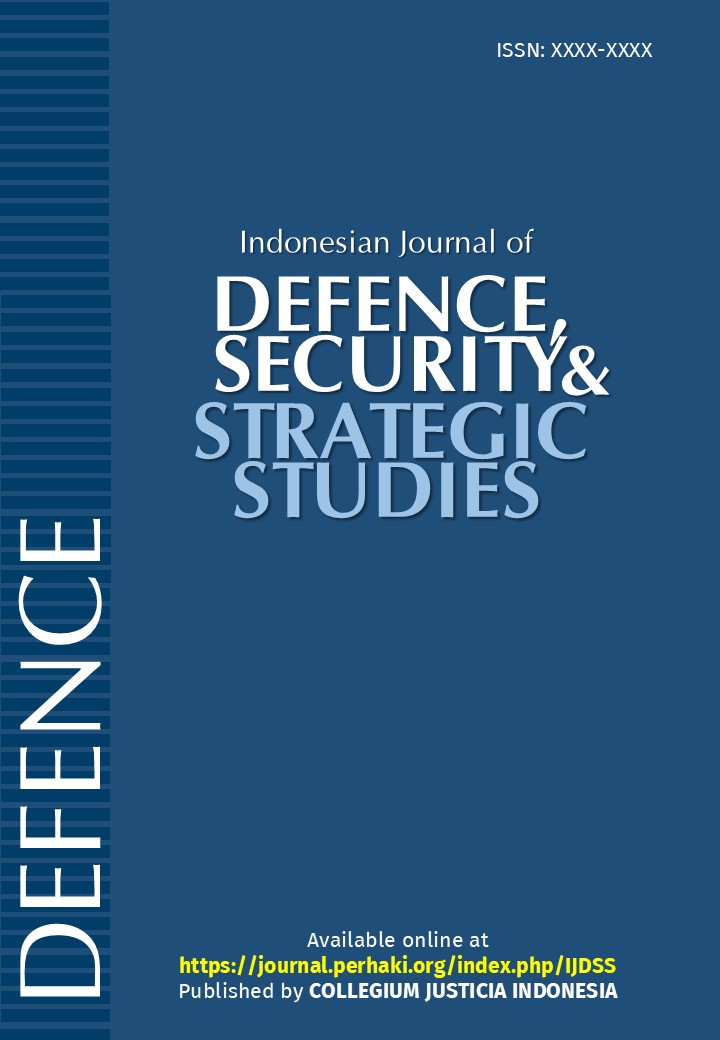
Indonesian Journal of Defence, Security and Strategic Studies
Indonesian Journal of Defence, Security and Strategic Studies (e-ISSN: XXXX-XXXX) is published by COLLEGIUM JUSTICIA INDONESIA, issued four times a year in February, May, August, November, and was first published in 2026. It is a double anonymous peer-reviewed academic journal focusing on defence, military affairs, security, and strategic studies in Indonesia. The journal publishes scholarly works examining defence policy, military strategy, national security, civil–military relations, defence governance, military professionalism, defence diplomacy, strategic intelligence, geopolitics, regional security, defence technology, cyber defence, maritime security, and contemporary strategic challenges. It also welcomes interdisciplinary studies addressing the intersection of defence and security with international relations, politics, law, economics, technology, public policy, and governance, including issues related to defence modernisation, military innovation, strategic competition, territorial security, hybrid threats, peace operations, and Indonesia's strategic position in the Indo-Pacific.
The journal encourages theoretical, empirical, comparative, and case-based studies that contribute to understanding the development of defence and strategic affairs in Indonesia and its broader regional and international contexts. It particularly welcomes research that connects Indonesian experiences with wider debates in defence, military, security, and strategic studies. The journal publishes original research articles, review articles, and other scholarly works relevant to its scope. The journal applies an Open Access Policy, providing free and immediate access to published articles. Copyright is retained by the authors, and articles are published under the Creative Commons Attribution 4.0 International (CC BY 4.0) license.
-
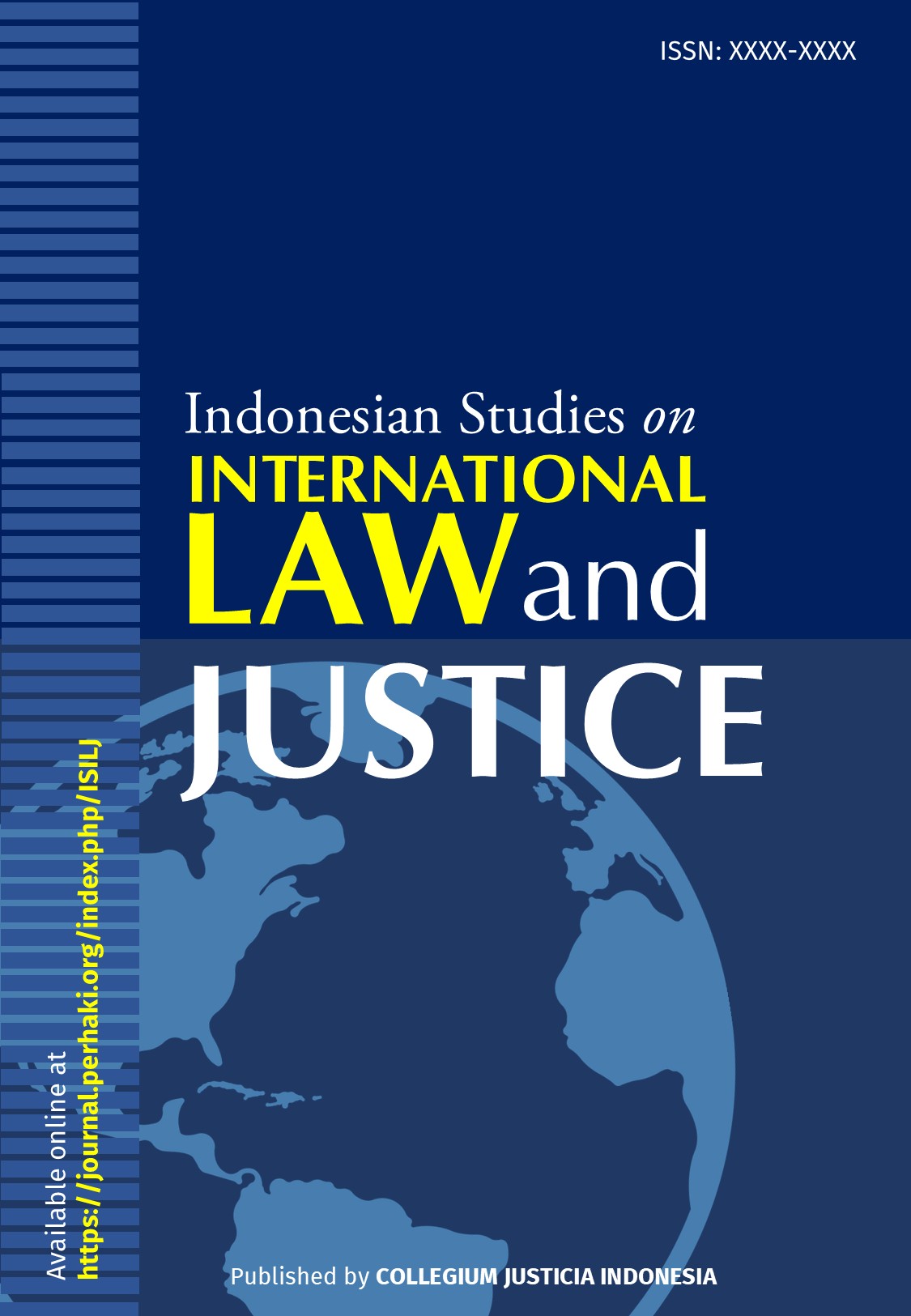
Indonesian Studies in International Law and Justice
Indonesian Studies in International Law and Justice (e-ISSN: XXXX-XXX) was first published in 2024 and is published by COLLEGIUM JUSTICIA INDONESIA. The journal is an international, double-blind peer-reviewed journal published four times a year (quarterly) in March, June, September, and December and is available exclusively as an online journal. The journal focuses on scholarly research in international law and international justice, particularly on issues concerning Indonesia, Southeast Asia, Asia, and the Global South. Its scope covers public international law, international human rights law, international humanitarian law, international criminal law, international environmental and climate law, the law of the sea, international economic and investment law, international trade law, international dispute settlement and arbitration, international organizations, ASEAN and regional legal governance, transnational law, migration and refugee law, international peace and security, and emerging issues in international law and technology. The journal welcomes doctrinal, theoretical, comparative, empirical, interdisciplinary, and socio-legal research examining the interaction between international legal norms and national, regional, and global legal systems.
The journal particularly encourages research that brings Indonesian and Southeast Asian perspectives into international legal scholarship and contributes to broader debates on global justice, accountability, human rights, sustainable development, environmental protection, maritime governance, global inequality, decolonization, and the participation of Global South states in the development of international law. All manuscripts undergo a double-blind peer-review process, in which the identities of both authors and reviewers are concealed throughout the review process, to ensure impartiality, academic rigor, and the quality of published scholarship. Submissions are expected to demonstrate originality, methodological and analytical rigor, engagement with relevant national and international literature, and a clear contribution to contemporary international legal scholarship. Articles dealing exclusively with domestic legal issues without a substantive connection to international law, comparative legal analysis, transnational legal developments, or broader questions of international justice are generally outside the journal's scope. Copyright of published articles is retained by the authors, who grant the journal the right of first publication. All articles are published under the Creative Commons Attribution 4.0 International (CC BY 4.0) License, allowing others to share and adapt the work provided appropriate credit is given to the author(s) and the original publication.
-
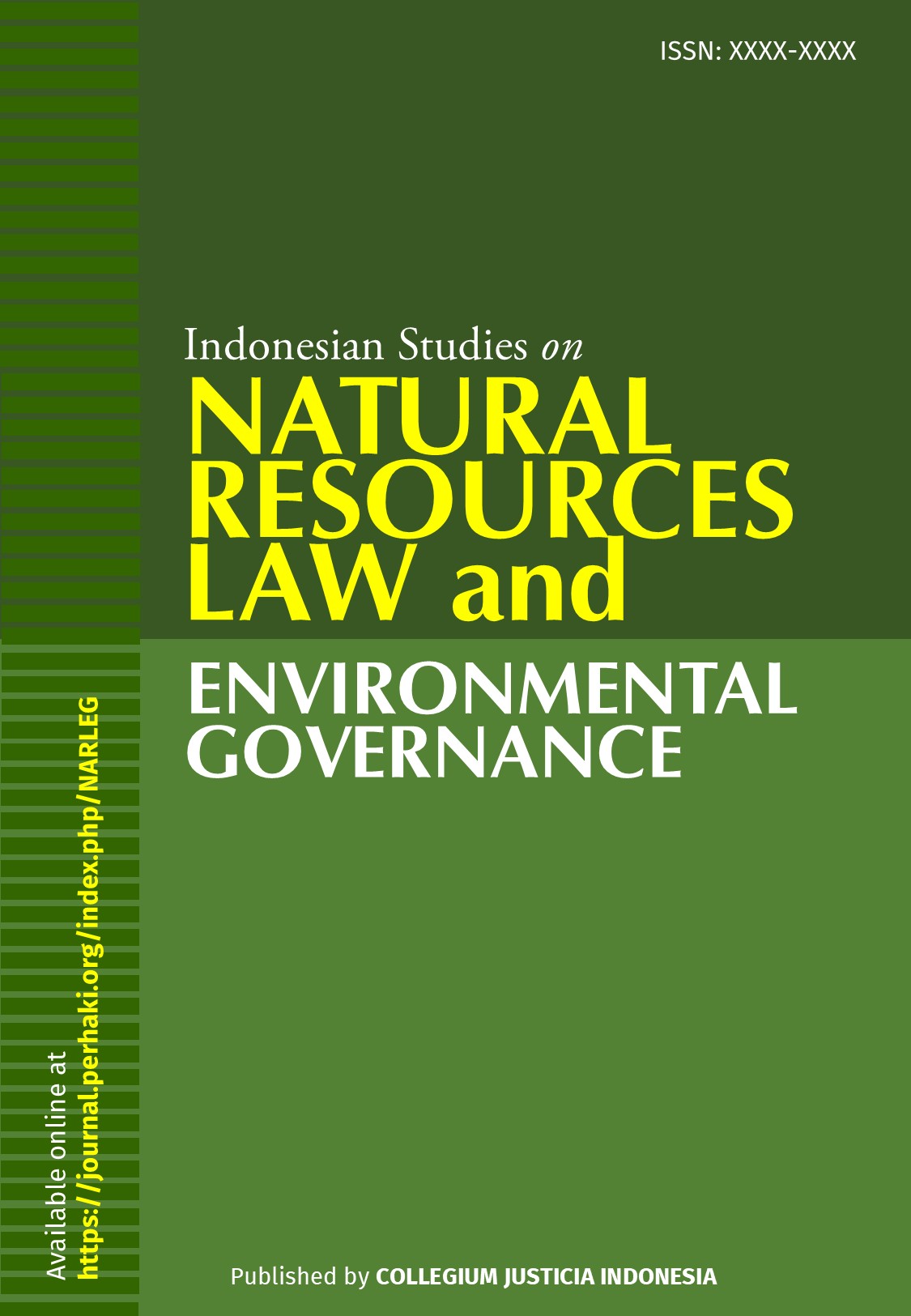
Indonesian Studies on Natural Resources Law and Environmental Governance
Indonesian Studies on Natural Resources Law and Environmental Governance (e-ISSN: XXXX-XXXX) was first published in 2024 and is published by COLLEGIUM JUSTICIA INDONESIA. The journal is an international, double-blind peer-reviewed journal published four times a year (quarterly) in February, May, August, November and is available exclusively as an online journal. The journal is dedicated to advancing scholarly research on natural resources law, environmental law, environmental governance, and sustainable development, with particular attention to Indonesia, Southeast Asia, Asia, and the Global South. Its scope covers natural resources governance, land and agrarian law, forestry law, mining and mineral resources law, energy law, renewable energy, oil and gas governance, water law, marine and coastal resources, fisheries law, biodiversity and conservation law, environmental protection, climate change law, pollution control, environmental impact assessment, environmental licensing, waste management, environmental rights, indigenous and local communities, environmental justice, corporate environmental responsibility, extractive industries, and sustainable development. The journal welcomes doctrinal, theoretical, comparative, empirical, interdisciplinary, and socio-legal research examining the legal, institutional, economic, and governance dimensions of natural resource management and environmental protection.
The journal particularly seeks to connect Indonesian and Southeast Asian experiences with broader international and comparative debates on environmental governance, resource justice, climate resilience, biodiversity protection, sustainable development, and the transition toward a green and low-carbon economy. It welcomes research addressing emerging issues including climate change adaptation and mitigation, energy transition, renewable energy governance, carbon markets, biodiversity loss, ecosystem conservation, indigenous peoples' and local communities' rights, environmental conflicts, corporate accountability, responsible investment, sustainable mining, blue economy, marine conservation, and the implementation of international environmental commitments at national and local levels. All manuscripts undergo a double-blind peer-review process, in which the identities of authors and reviewers are concealed to promote impartiality, academic rigor, and the quality of published research. Submissions should demonstrate originality, methodological and analytical rigor, engagement with relevant national and international scholarship, and a clear contribution to contemporary debates in natural resources law and environmental governance. Manuscripts dealing exclusively with technical, scientific, or purely domestic environmental matters without a substantive legal, governance, comparative, interdisciplinary, or broader policy dimension are generally outside the journal's scope. Copyright of published articles is retained by the authors, who grant the journal the right of first publication. All published articles are distributed under the Creative Commons Attribution 4.0 International (CC BY 4.0) License, permitting others to share and adapt the work provided appropriate credit is given to the author(s) and the original publication.