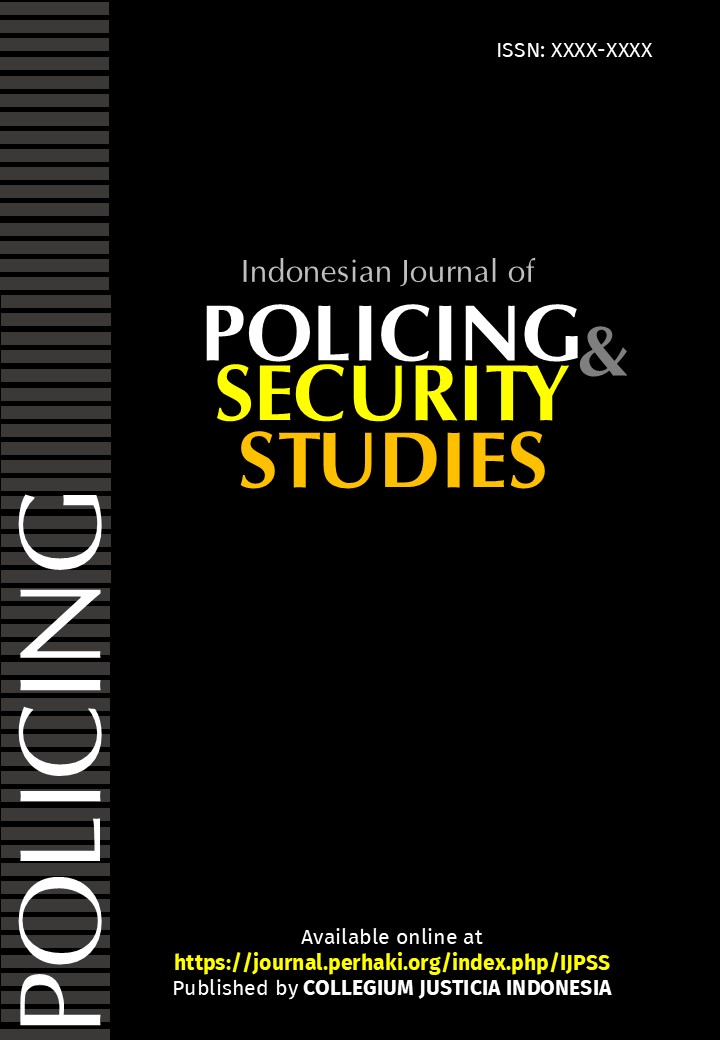
Social Media and Contemporary Policing in Indonesia: Public Communication, Crisis Response, and Institutional Reputation
DOI:
https://doi.org/10.65815/7abjcp09Keywords:
social media policing, police communication, digital engagement, institutional reputation, IndonesiaAbstract
Social media has transformed communication between police institutions and the public by enabling rapid dissemination of information, direct interaction, and real-time responses to emerging incidents. At the same time, social media exposes police institutions to reputational risks, misinformation, public criticism, and communication crises. This study examines the role of social media in contemporary policing in Indonesia, focusing on public communication, crisis response, and institutional reputation. The research adopts a qualitative approach to analyse police communication practices, digital engagement, and the broader institutional implications of social media use. The study argues that social media should not be viewed solely as a public-relations instrument but as an important component of contemporary police–community relations. Effective digital communication requires transparency, responsiveness, accuracy, consistency, and awareness of public expectations. The analysis also highlights the importance of institutional capacity to respond to misinformation and rapidly developing public controversies without undermining public trust. The study contributes to policing and communication scholarship by examining how digital platforms reshape police legitimacy and institutional communication in Indonesia. It recommends the development of integrated digital communication strategies supported by professional training, clear communication protocols, and mechanisms for public engagement.
Published
Issue
Section
License

This work is licensed under a Creative Commons Attribution 4.0 International License.
All writings published in this journal are the personal views of the authors and do not represent the views of this journal or the authors’ affiliated institutions. Authors retain copyrights without any restriction under the license of Creative Commons Attribution 4.0 International (CC BY 4.0).